
Persistent Innovation: Why failure is the engine of progress in drinks brands
In most drinks businesses, failure has an image problem. According to a recent report by BCG, roughly 75 per cent of innovation efforts fail to deliver meaningful commercial returns. For many, this reads like an indictment; evidence of wasted investment, poor execution, or misjudged bets.
But this interpretation misses something more fundamental. In categories as culturally fluid and structurally competitive as drinks, a high failure rate is not a flaw in the system. It is the system.
Innovation in spirits, wine and soft drinks does not operate in a stable environment. Consumer taste shifts quickly, often unpredictably. Trends move at the speed of culture, from low-ABV aperitifs to functional beverages, from premiumisation to playful escapism, and what resonates one season may feel tired the next. Layer onto this tightly controlled retail space, increasingly selective buyers, and a crowded field of brands competing for attention. In such conditions, innovation is not an exercise in optimisation. It is a search.
And search, by its nature, is inefficient. Most paths lead nowhere. The role of innovation is not to be right every time, but to systematically eliminate what does not work until something does. A failed product is not simply a commercial miss. It is a data point, a signal that sharpens future decision-making and, over time, compresses the uncertainty that defines the category.
This is where the conversation becomes more interesting. The real value of failure is not just informational. It is behavioural.
A series of experiments conducted in the 1950’s by American biologist Kurt Richter offers an unexpected lens. In one study, rats placed in water gave up and sank within minutes. But if the same rats were rescued shortly before exhaustion and returned to the water, their behaviour changed dramatically… having experienced survival once, they persisted far longer the next time. Exposure to near-failure, followed by recovery, fundamentally alters endurance. Persistence is not simply an innate trait. It is conditioned.
Applied to drinks brands, this reframes how we think about innovation capability. The companies that succeed are not necessarily those with the best ideas, the sharpest branding, or the deepest pockets. They are the ones that have learned, through repeated cycles of trial and rejection, how to keep going. The true competitive advantage in innovation is not creativity. It is stamina.
This runs counter to how many organisations are structured. Success is often measured by hit rate. Teams are rewarded for avoiding failure, for backing safe bets, for staying close to what has worked before. The result is a drift towards incrementalism, line extensions, flavour variations, minor packaging tweaks. These have their place, but they are not where meaningful growth tends to come from.
The most dynamic drinks brands optimise for something else entirely: iteration rate.
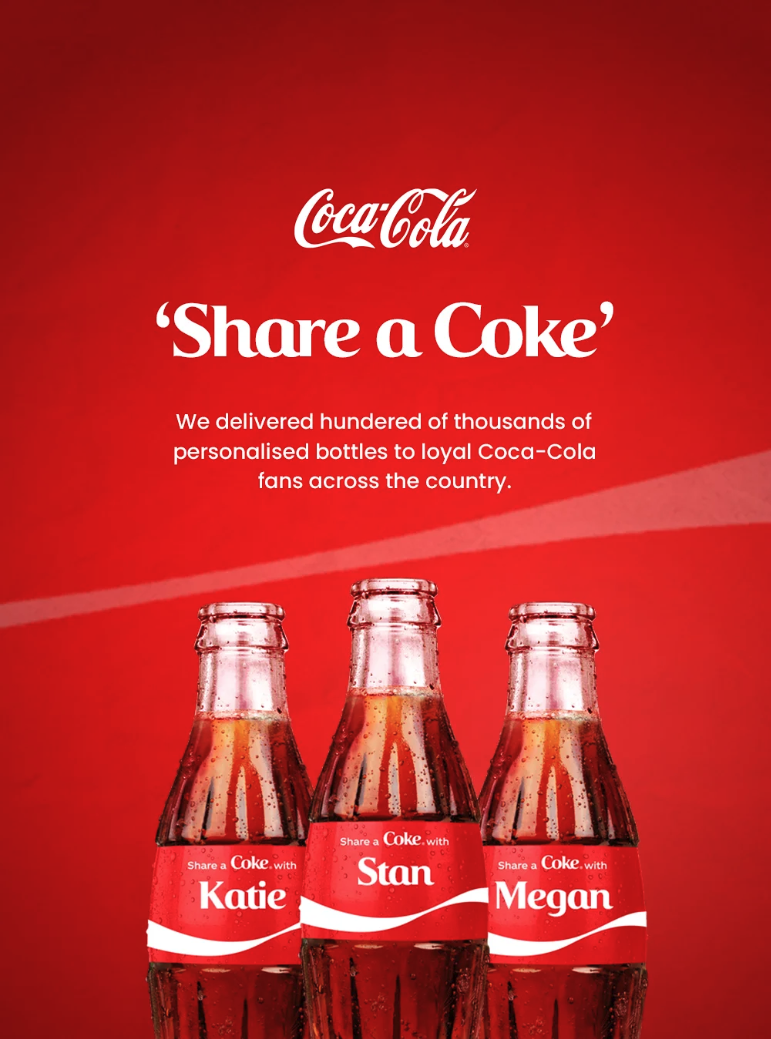
They build systems that allow them to generate, test and discard ideas quickly, without overcommitting to any single one. The explosion of ready-to-drink cocktails, the rise of alcohol-free spirits, the proliferation of niche liqueurs and aperitifs, these are not the result of a handful of perfectly judged bets. They are the visible outcomes of hundreds, if not thousands, of experiments, many of which never reached the shelf or quietly disappeared from it.
What distinguishes the brands that break through is not that they avoided failure. It is that they absorbed it, learned from it, and continued to move.
This is the essence of persistent innovation, the ability to continuously generate, test, discard and regenerate ideas without losing momentum or conviction. At its core are four capabilities. The first is emotional resilience: treating failure as a normal, expected outcome rather than a reputational threat. The second is operational rhythm: building pipelines that allow for rapid iteration without overwhelming the business. The third is cognitive detachment: resisting the temptation to fall in love with any one idea. And the fourth is long-term orientation: recognising that meaningful innovation is cumulative, not episodic.
A portfolio with a high success rate may simply indicate that a company is not pushing far enough into the unknown. A certain level of failure is a sign of health, evidence that the business is exploring, not just exploiting. This does not make discipline irrelevant; persistent innovation still requires rigorous evaluation, clear decision-making frameworks and a willingness to cut losses early. But it requires a reframing of what success looks like. Not every product needs to win. The system does.
If persistence is the defining trait of successful innovators, it cannot be outsourced or shortcut. It must be built over time, through experience, placing a premium on continuity of teams, thinking and commitment to the long game.
The 75 per cent failure rate is not a statistic to be feared. It is a reflection of the reality that innovation in drinks is a process of exploration under uncertainty. The brands that thrive are not those that avoid this reality, but those that build the capacity to endure it.
If failure is the cost of admission, persistence is the price of success.